
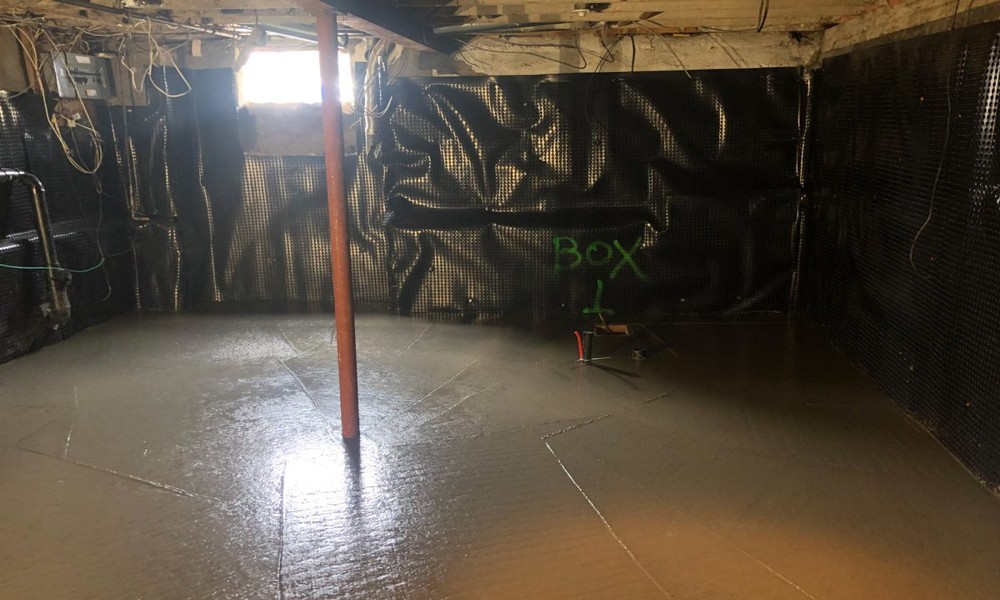
When homeowners first hear about basement underpinning, the initial reaction is often sticker shock. It is widely known as one of the more costly foundation services, which naturally leads many people to question whether the price is justified or if it is an expense best avoided. While underpinning does require a significant upfront investment, evaluating it solely through initial cost can be misleading. To understand whether basement underpinning is expensive or genuinely worthwhile, homeowners need to look beyond short-term pricing and consider long-term value, structural stability, and future flexibility.
Basement underpinning is not a cosmetic improvement or a routine repair. It is a structural upgrade that permanently alters the way a home is supported. When evaluated through that lens, the conversation shifts from “How much does it cost?” to “What does this investment actually deliver over time?”
Why Basement Underpinning Has a Higher Upfront Cost
The cost of basement underpinning reflects the complexity and risk involved in modifying a home’s foundation. Unlike surface-level concrete work, underpinning requires excavation beneath an existing structure, careful load redistribution, engineered sequencing, and high-strength concrete installation. Each stage must be completed precisely to maintain stability throughout the process.
Labour, engineering, permitting, and material costs all contribute to the final price. Additionally, underpinning is performed in stages rather than all at once, which extends project timelines and increases labour intensity. These factors explain why underpinning costs more than many other basement or foundation services, but they also highlight why it delivers a level of permanence that cheaper alternatives cannot match.
Comparing Underpinning to Short-Term Foundation Fixes
Homeowners often compare basement underpinning to less expensive foundation solutions such as crack repairs, interior drainage systems, or partial reinforcement. While these services have their place, they address symptoms rather than root causes. They may manage water intrusion or cosmetic damage, but they do not improve foundation depth or load-bearing capacity.
Basement underpinning addresses the foundation itself. By extending it to more stable soil and redistributing structural loads, underpinning resolves the underlying issues that cause settlement, cracking, and long-term instability. When homeowners repeatedly invest in temporary fixes over the years, the cumulative cost can approach or exceed that of underpinning-without delivering the same level of security.
How Basement Underpinning Adds Long-Term Structural Value
One of the most overlooked benefits of basement underpinning is its impact on long-term structural resilience. A deeper, reinforced foundation is better equipped to handle soil movement, changing groundwater conditions, and the cumulative weight of the structure over decades.
This added stability reduces the likelihood of future foundation problems, which can be costly and disruptive to address later. From a long-term perspective, underpinning functions as a one-time structural upgrade rather than a recurring maintenance expense. Homeowners who plan to stay in their homes for many years often find that this permanence justifies the initial investment.
Increased Usable Space and Functional Value
Basement underpinning is often pursued not only for structural reasons but also to increase ceiling height. Many older homes were built with basements that are too low to be comfortably finished or legally occupied. Underpinning allows homeowners to lower the basement floor while reinforcing the foundation, creating usable space that did not previously exist.
This newly usable square footage can significantly change how a home functions. Whether it becomes a living space, a home office, storage, or a rental unit, the value lies in flexibility. Instead of being limited by low ceilings or structural constraints, homeowners gain options that extend well beyond the immediate project.
Financial Impact on Property Value
From a real estate perspective, a home with a reinforced foundation and increased basement height is often viewed more favourably than one with unresolved structural limitations. Buyers are typically wary of foundation concerns, and a completed underpinning project can remove uncertainty from the equation.
While property value increases vary by market, the presence of basement underpinning often strengthens buyer confidence and reduces negotiation pressure related to foundation condition. In this sense, underpinning can protect value as much as it enhances it, particularly in competitive housing markets.
Cost vs. Cost Avoidance Over Time
Another way to evaluate basement underpinning is through cost avoidance. Foundation issues tend to worsen over time if left unaddressed, leading to more extensive damage and higher repair costs in the future. Cracks widen, floors slope, and structural stress increases, making eventual intervention more complex and expensive.
By addressing these issues proactively through underpinning, homeowners can avoid escalating repair costs and the stress that comes with structural uncertainty. This preventative aspect is a major reason underpinning is often considered an investment rather than an expense.
Energy Efficiency and Comfort Considerations
While basement underpinning is not primarily an energy upgrade, it can indirectly support improved insulation, moisture control, and overall comfort. A deeper, properly finished basement allows for better insulation placement and reduced drafts, contributing to more consistent indoor temperatures.
Over time, these improvements can support lower energy costs and a more comfortable living environment. While these savings alone may not justify underpinning, they contribute to the overall value proposition when considered alongside structural benefits.
When Basement Underpinning May Not Be the Right Investment
Despite its benefits, basement underpinning is not the right choice for every homeowner. If a home has no structural issues and no plans for basement use, the return on investment may be limited. In some cases, alternative solutions such as bench footing or partial reinforcement may provide sufficient results at a lower cost.
This is why proper assessment is critical. Underpinning delivers the most value when it aligns with both structural needs and long-term plans for the home.
Evaluating Underpinning Through a Long-Term Lens
When viewed purely as a construction expense, basement underpinning can seem costly. When evaluated as a permanent structural upgrade that increases stability, usability, and future flexibility, the perspective changes. It becomes less about immediate cost and more about long-term performance and peace of mind.
Homeowners who take a long-term view often find that basement underpinning aligns with their goals, particularly if they plan to remain in the home or maximize its functionality. The key is understanding what the investment delivers and how it fits into broader plans for the property.

Comments are closed.