
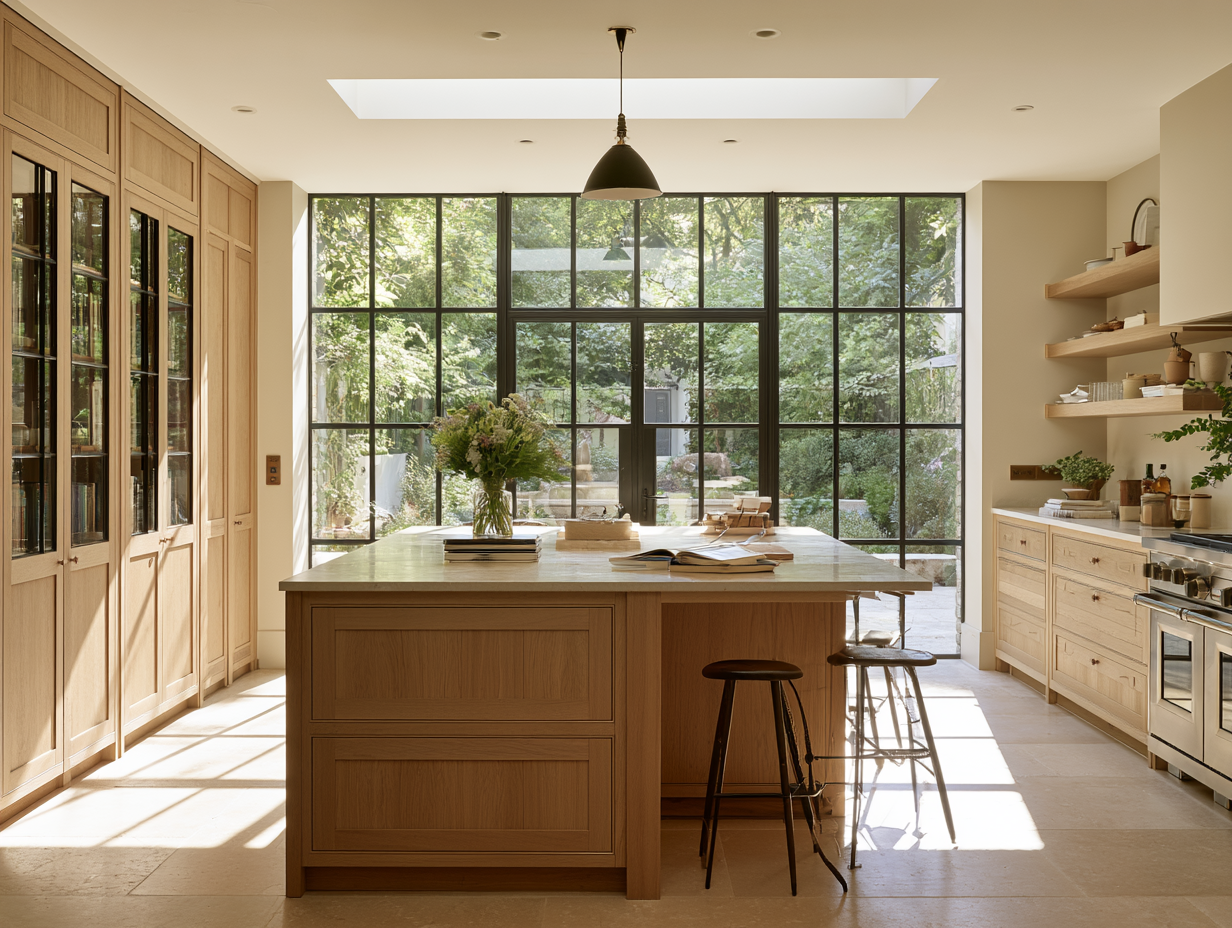
Walk into a kitchen showroom and look at the price of a full set of cabinets. The number can be surprising.
Then search online for RTA kitchen cabinets, and you may find cabinets that look very similar for much less money.
That raises an obvious question: What is the catch?
Are RTA cabinets made with cheap materials? Are they weaker? Or are traditional cabinets simply overpriced?
The answer is more interesting than it seems.
RTA stands for Ready-to-Assemble. Instead of arriving at your home as finished cabinet boxes, the pieces arrive packed flat. You or your installer put them together before installation.
That simple difference changes almost every part of the cost, from factory labor to shipping and storage.
Here is why RTA cabinets can cost so much less—and what you should know before choosing them.
First, What Are RTA Kitchen Cabinets?
Think about buying a piece of flat-pack furniture.
The box contains separate panels, doors, hardware, screws, and other parts. You follow the instructions and assemble everything at home.
RTA cabinets work in a similar way.
The cabinet manufacturer cuts and prepares the pieces at the factory, but the final cabinet box is not assembled before shipping.
Traditional cabinets often arrive already assembled and ready for installation.
That convenience costs money.
With RTA cabinets, part of the work moves from the manufacturer to the buyer. This is the first big reason for the lower price.
You Are Not Paying the Factory to Assemble Every Cabinet
Building a cabinet takes time.
Workers have to assemble the box, attach different parts, inspect it, and prepare the finished cabinet for shipping.
Multiply that process by 10, 15, or 20 cabinets for a full kitchen.
Labor costs quickly grow.
With RTA kitchen cabinets, much of this assembly work is removed from the factory process.
The manufacturer prepares the components and packs them into boxes. Final assembly happens later.
You are basically trading some of your time—or your installer’s time—for a lower purchase price.
That does not automatically mean the cabinet itself is lower quality.
It means you are buying it at an earlier stage of the process.
Flat Boxes Are Much Cheaper to Ship
This is one of the biggest differences people often overlook.
Imagine shipping an assembled base cabinet.
Most of that cabinet is actually empty space.
A delivery truck might carry dozens of large cabinet boxes filled with nothing but air.
Now imagine taking those same cabinets apart and stacking the panels flat.
Suddenly, they take up far less room.
More products can fit inside the same truck or shipping container. Warehouses can also store more cabinets in the same amount of space.
That can reduce transportation and storage expenses.
Those savings can then show up in the final price.
This is one reason buying RTA cabinets online has become practical. Shipping a stack of flat boxes is much easier than shipping a kitchen full of bulky assembled cabinets.
Storage Costs Are Lower Too
Shipping is only part of the story.
Cabinets may spend weeks or months sitting in a warehouse before someone buys them.
An assembled cabinet takes up a lot of space.
Ten assembled cabinets take up even more.
Warehouse space costs money. Businesses have to pay for the building, employees, equipment, utilities, insurance, and inventory management.
Flat-packed cabinets use space more efficiently.
A company can store a larger amount of inventory in the same warehouse.
That lowers another hidden cost that customers rarely think about when comparing cabinet prices.
Many RTA Sellers Cut Out Extra Middlemen
Traditional cabinets may pass through several stages before reaching your kitchen.
There may be a manufacturer, distributor, local dealer, showroom, designer, and installer involved in the process.
Each business needs to make money.
That can add another layer to the final price.
Many RTA cabinet companies use a more direct sales model, especially online.
Instead of paying for a large local showroom and multiple sales layers, the company may sell directly to homeowners, contractors, or remodelers.
Fewer steps between the factory and your house can mean fewer markups.
This does not happen with every RTA brand, but it is an important reason some online cabinet prices look dramatically lower.
You May Be Paying Less for Customization
Here is another major difference.
Traditional or custom cabinet companies may offer an enormous range of choices.
You might be able to change cabinet dimensions, door styles, finishes, interior features, trim, molding, hardware, and other details.
Customization requires extra work.
RTA companies usually control costs by offering a more standardized product line.
You may get several popular sizes and finishes instead of hundreds of possible combinations.
That makes manufacturing faster and more predictable.
The downside is that unusual kitchens can be harder to design with standard cabinet sizes.
If your kitchen has strange corners, uncommon dimensions, or highly specific design requirements, custom cabinets may offer more flexibility.
Does Cheaper Mean Lower Quality?
Not necessarily.
This is probably the biggest misunderstanding about RTA kitchen cabinets.
The term RTA describes how the cabinet is delivered. It does not tell you exactly how well the cabinet is built.
There are low-quality RTA cabinets.
There are also well-built RTA cabinets.
The same is true with assembled cabinets.
Instead of judging a cabinet only by the price, look at what you are actually getting.
Check the cabinet box material, drawer construction, hinges, drawer slides, finish quality, shelves, and warranty.
For example, plywood cabinet boxes and solid wood components may cost more than cabinets made mainly with lower-cost engineered materials.
Soft-close hinges and quality drawer slides can also make a noticeable difference in daily use.
A cheap price is attractive, but the specifications matter more.
There Is One Cost You Should Not Forget
RTA cabinets need assembly.
If you enjoy DIY projects and have the right tools, this may not be a problem.
You could save a meaningful amount of money by assembling the cabinets yourself.
But imagine receiving 15 or 20 boxes.
Each cabinet needs to be unpacked, organized, assembled correctly, checked, and then installed.
That takes time.
If you hire someone to assemble them, add that labor cost to your budget before comparing prices.
A $7,000 RTA cabinet package plus $2,000 in assembly and installation is not really a $7,000 kitchen cabinet project.
Always compare the total finished cost, not just the advertised cabinet price.
Where Should You Spend the Money You Save?
This is where RTA cabinets can become interesting.
Suppose choosing RTA saves several thousand dollars compared with another cabinet option.
That money could go toward parts of the kitchen you will use every day.
You might put the savings toward:
- Better countertops
- Higher-quality appliances
- A larger kitchen island
- Better lighting
- A tile backsplash
- Premium cabinet hardware
- Improved flooring
- Professional installation
For homeowners working with a fixed remodeling budget, this flexibility can be valuable.
Instead of putting a huge percentage of the budget into cabinet assembly and distribution costs, you can decide where the extra money matters most.
When RTA Cabinets Make the Most Sense
RTA cabinets are especially attractive for kitchens with fairly standard layouts.
They can also make sense for rental properties, investment homes, budget renovations, laundry rooms, home offices, and homeowners who are comfortable doing some DIY work.
But they are not automatically the best choice for every kitchen.
If you need unusual cabinet sizes, complex modifications, a highly specific finish, or detailed custom work, traditional semi-custom or custom cabinets may be worth the additional cost.
The goal should not be to find the cheapest cabinet.
It should be to find the best cabinet for your project and budget.
So, Why Are RTA Kitchen Cabinets So Cheap?
The lower price is not based on one secret shortcut.
It comes from several savings working together.
Manufacturers spend less on final assembly. Flat packaging reduces shipping and warehouse space. Standard sizes make production easier. Online sellers may reduce showroom and dealer costs. Buyers also take responsibility for some of the work.
Put all those savings together, and the price difference can become significant.
That is why RTA kitchen cabinets can sometimes look similar to traditional cabinets while carrying a much smaller price tag.
Just remember that RTA does not automatically mean “great deal.”
Look beyond the price. Check the materials, construction, hardware, warranty, shipping charges, and assembly costs.
If those details are solid, RTA cabinets can be a smart way to build a beautiful kitchen without letting the cabinets consume your entire remodeling budget.

Comments are closed.