
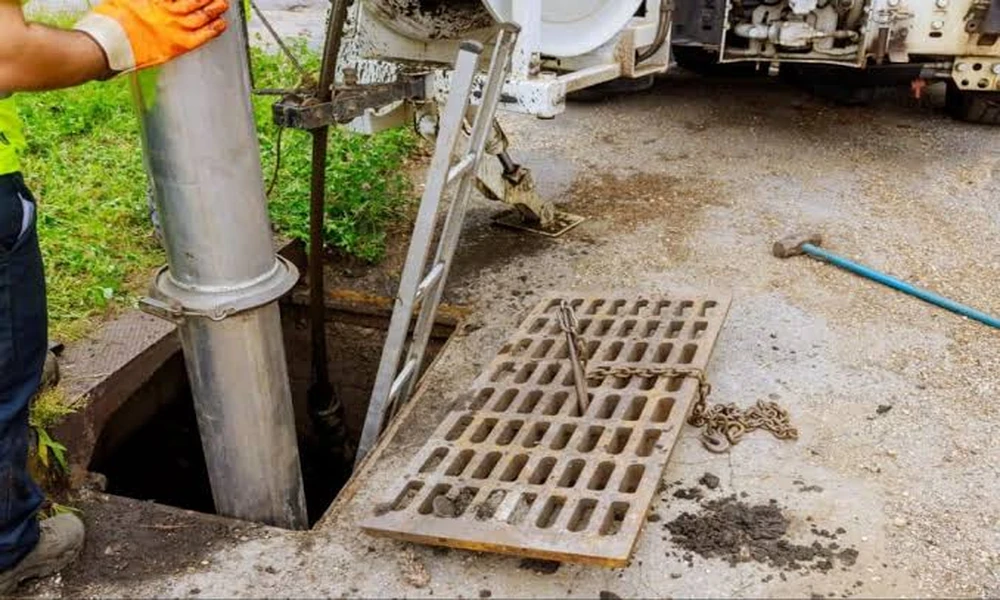
Every gallon that leaves a sink, tub or toilet in an Iowa City home takes the same route. It drops through a trap, runs along a branch line, joins the main building drain, then travels through a buried lateral to the city sewer under the street. Sewer and drain problems can start anywhere on that path, and the symptom inside the house rarely says where. A gurgling toilet might trace back to a pipe a few feet away or to a root mass sixty feet out under the lawn.
That matters more than many owners expect. In Iowa City, the property owner is responsible for repairs and maintenance from the city main up to and including the building. A cracked joint under the parkway or a sag beneath the front yard is the owner’s to find and fix, and the cost swings widely depending on which stage failed and how it gets repaired.
For owners who want answers instead of guesses, A1 Sewer Service works the line from the drain opening outward. Mechanical drain cleaning restores flow first, hydro jetting follows when grease or roots have coated the pipe wall, and a high-definition video inspection with locating pins down the exact position and depth of any defect before digging comes up. The crew covers Iowa City, Cedar Rapids and the surrounding Johnson, Linn, Iowa and Washington County communities around the clock, and handles excavation and sewer line repair when the camera finds a broken or collapsed section. If a drain keeps slowing or the basement floor drain has backed up even once, book a camera inspection and see what the line actually looks like.
Inside the House: Where Most Clogs Begin
The fixture trap. The curved pipe under each sink, tub and shower holds a few inches of water to block sewer gas. That bend also catches hair, soap scum and toothpaste in bathrooms, and coffee grounds and fibrous peels in kitchens. A clog here affects one fixture only, which is the useful clue. If just the bathroom sink is slow, the problem almost certainly sits within a few feet of the drain, and pulling the trap or running a hand auger usually solves it.
Branch lines. From each trap, wastewater moves through small horizontal pipes, usually 1.5 to 2 inches across, sloped about a quarter inch per foot. Kitchen branches cause the most trouble. Grease leaves the sink warm and liquid, then cools and coats the pipe wall, trapping food particles until the opening narrows to the width of a pencil. Running hot water only moves the grease farther down where it hardens again. When two fixtures sharing a branch drain slowly, like a kitchen sink and dishwasher, the blockage is in the shared line. A cable punches a hole through the buildup, while jetting scours the wall back to bare pipe, which is why grease clogs cleared with a cable alone tend to return within months.
The Building Drain: Where Symptoms Surface
The main building drain. Every branch feeds the largest pipe in the house, typically 3 or 4 inches, running under the basement slab in most local homes before it exits through the foundation. Older houses often have cast iron here, which scales from the inside and can rot through along the bottom where water always flows. Because the basement floor drain is usually the lowest opening on the system, it becomes the overflow point for anything blocked downstream. Water rising from that drain when the washer empties, or toilets gurgling when a tub drains, points past the branches to the main line.
The cleanout. Most homes have a capped access fitting near where the drain leaves the building. It is the entry point for clearing the main and feeding a camera. A cracked or missing cap lets sewer gas in and groundwater out, so it is worth checking on any service call.
Outside the House: Damage You Cannot See
The lateral. The buried pipe from foundation to street is where serious problems develop. Depending on the home’s age, it may be clay tile with joints every few feet, cast iron, PVC, or Orangeburg, a tar-soaked fiber pipe common after World War II that slowly flattens underground. Roots follow moisture escaping from clay joints and grow into dense mats. Freeze and thaw cycles and settling soil can shift a joint out of line or leave a low belly where solids collect. The City of Iowa City recommends inspecting the sewer service at least every five years and having it televised where Orangeburg pipe may be present. A camera run shows the defect, measures its distance from the cleanout, and lets a transmitter in the camera head mark its exact spot and depth on the surface.
The tap at the city main. The final connection, where the lateral joins the public sewer, still belongs to the owner and often sits under pavement. It is usually the deepest and oldest point on the line, so roots and offset joints cluster there. Leaky laterals also let groundwater into a system built only for wastewater, part of a wider problem: the EPA estimates at least 23,000 to 75,000 sanitary sewer overflows occur nationwide each year, and that count leaves out backups into buildings entirely.
Choosing Between Digging and Trenchless Repair
When trenchless works. Once the camera shows what is wrong, the repair method usually follows from the pipe’s condition. If the line still holds its shape and grade but has cracks, root entry points or minor joint gaps, a cured-in-place liner can be pulled through and hardened inside the old pipe, forming a new seamless wall without trenching the yard. Pipe bursting, which pulls new pipe through while fracturing the old one, suits a lateral needing full replacement along a straight run with access at both ends.
When excavation makes more sense. Trenchless methods follow the existing pipe, flaws included. A liner installed through a sagging belly just creates a smooth belly that still holds waste, and a collapsed section stops the liner from passing at all. Flattened Orangeburg, badly offset joints and lines with the wrong slope are usually better handled by digging down to the damage and replacing that stretch with properly graded pipe. Excavation also wins for short, shallow repairs near the foundation, where an open trench costs less than setting up lining equipment. Reviewing the camera footage before deciding is the clearest way to know which category a line falls into, and it gives owners something concrete to compare when quotes start coming in.

Comments are closed.