
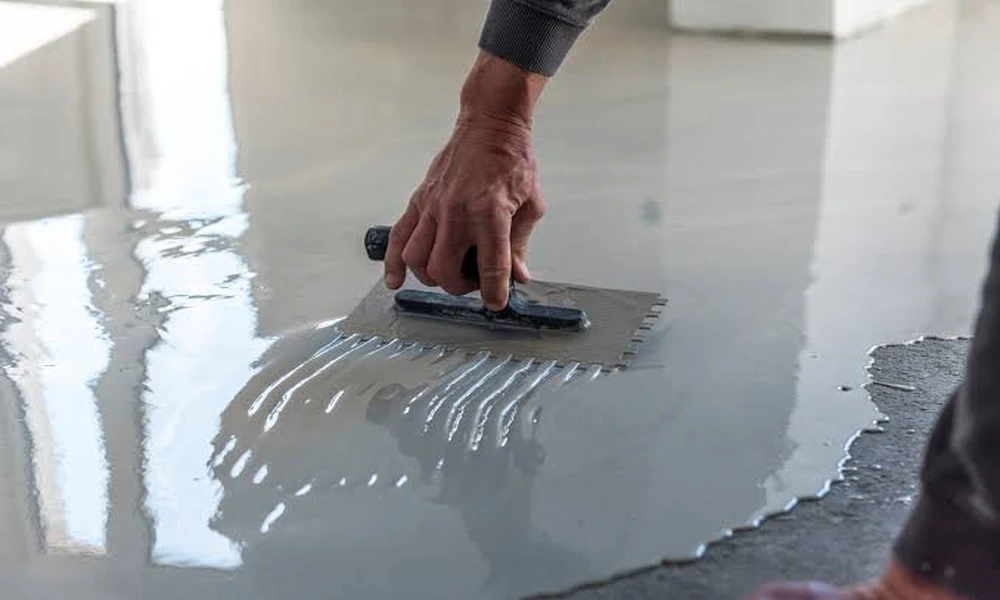
Fresh concrete should not be treated as a water-damaged material that simply needs the fastest possible moisture removal. Curing has a different purpose, and environmental changes must respect the requirements of the actual concrete work. Before renting a commercial dehumidifier nearby, ask the responsible contractor to explain the stage of the work and the conditions it needs.
A Richmond Hill property owner may hear that rental equipment can help manage moisture during construction and assume that a larger unit will accelerate every wet-looking process. That assumption overlooks an important distinction. Some moisture is an unwanted condition to address; some belongs to a material process that must be managed according to its specification.
Curing has a purpose beyond a dry-looking surface
The American Concrete Institute defines curing in terms of maintaining moisture and temperature conditions so cement hydration and the development of material properties can proceed. This is the key reason to avoid equating curing with drying. The definition explains the distinction without supplying a household recipe for a particular slab or repair.
For an owner, the useful implication is that appearance is an incomplete guide. A surface looking less wet does not establish that the specified process has been completed or that another stage is approved. Ask the contractor which requirements govern the work and how they will determine that the relevant conditions have been met.
Do not attempt to improve the process by changing the surrounding environment independently. Adding drying equipment, directing airflow or altering heating may conflict with the plan even when the change seems helpful. Describe the desired outcome to the contractor before choosing a machine intended to produce it.
The terminology used onsite should be made clear. Someone may casually say the concrete needs time to dry while referring to a more specific requirement. Ask what decision is actually pending and which document governs it. Clarifying the language helps prevent a casual phrase from becoming an instruction to remove moisture as aggressively as possible.
Keep different materials separate in the discussion. A concrete placement, a repair mortar and an unrelated wet wall should not be assigned one universal treatment because they occupy the same room. Each may need advice tied to its product and condition. The owner’s first task is to make those distinctions visible.
Identify the concrete product and its stage
Gather the description of the actual work from the contractor. Is it a newly placed area, a repair to an existing surface or another cementitious product with its own instructions? The answer should identify what is present, not simply repeat the word concrete. Product and project documentation provide a more useful starting point than the colour of the surface.
Establish when the relevant work occurred and what treatment has already been specified. Do not reconstruct a detailed history from guesses if several trades were involved. Ask the responsible contractor to supply the account needed for the next decision, including any known change to the original plan.
The stage matters to the equipment enquiry. A question during early curing is different from a later question about conditions required for a subsequent finish. The owner should not transfer advice from one stage to another merely because the room and concrete remain the same. Keep the current purpose attached to any recommendation.
If a product instruction or contractor’s requirement seems to conflict with advice from another supplier, have the relevant professionals resolve it directly. A homeowner should not average two different recommendations or select the one that offers the earliest completion date. The apparent conflict may reflect different materials, stages or assumptions.
Discuss any uncertainty before ordering extra equipment. The time spent identifying the correct specification is part of making the hire useful. A unit delivered before its role is established may create pressure to operate it simply because it is already being paid for, even though the material question remains unanswered.
Separate room control from treatment of the new work
There can be more than one environmental concern in a renovation. The room may have an independently assessed moisture issue while new concrete work requires its own conditions. Ask the project lead how those needs will be coordinated. One objective should not silently override the other because it has the more visible piece of equipment.
Where a qualified plan calls for commercial dehumidifier hire in Richmond Hill, Drying Equipment offers a category to investigate. Tell the provider about the fresh concrete and the responsible contractor’s requirements. Confirm suitability for the actual application rather than treating the availability of a commercial unit as approval to use it around any new work.
Explain the area the machine is intended to serve and any boundaries in the project plan. Do not assume that placing it a little farther from the concrete resolves a possible conflict. The relevant professional should decide whether and how the arrangement can meet the project’s requirements.
Keep equipment selection separate from promises about material performance. A rental provider can identify the supplied unit and its instructions. The concrete contractor or other responsible professional must address the specification for the concrete. Confirm the limits of each role so that an equipment recommendation is not misunderstood as acceptance of the finished material.
Also clarify who may change the arrangement. Another trade should not redirect equipment or adjust the room’s conditions merely to make their own task easier. If an operating change is needed, bring it to the person coordinating the environmental requirements before the new arrangement becomes established by habit.
Let the specification govern changes to the environment
A useful project record identifies the required conditions, the person responsible and how changes will be communicated. It does not need to reproduce a technical manual. Retain the applicable instructions and any project-specific direction so that the reason for the arrangement remains available when a different person visits the site.
When the work reaches another stage, ask whether the environmental plan changes and who authorizes that change. Avoid using the rental’s billing period as the trigger. Extending, adjusting or collecting equipment should follow its agreed role within the project rather than an assumption that every process ends when the initial hire expires.
Concerns about unexpected appearance or progress should go back to the responsible professional. Do not add water, heat, coatings or more airflow as an experiment intended to restore an expected look. The appropriate response depends on the material and the actual finding, and may require examination before any treatment is changed.
The owner can evaluate a proposed plan by asking whether its purpose is clear, whether it fits the material’s current stage and whether somebody is responsible for assessing the result. Those questions are more useful than asking only how dry a machine can make the air. Fresh concrete needs the conditions its specification calls for, and successful equipment hire supports that requirement rather than competing with it.

Comments are closed.