
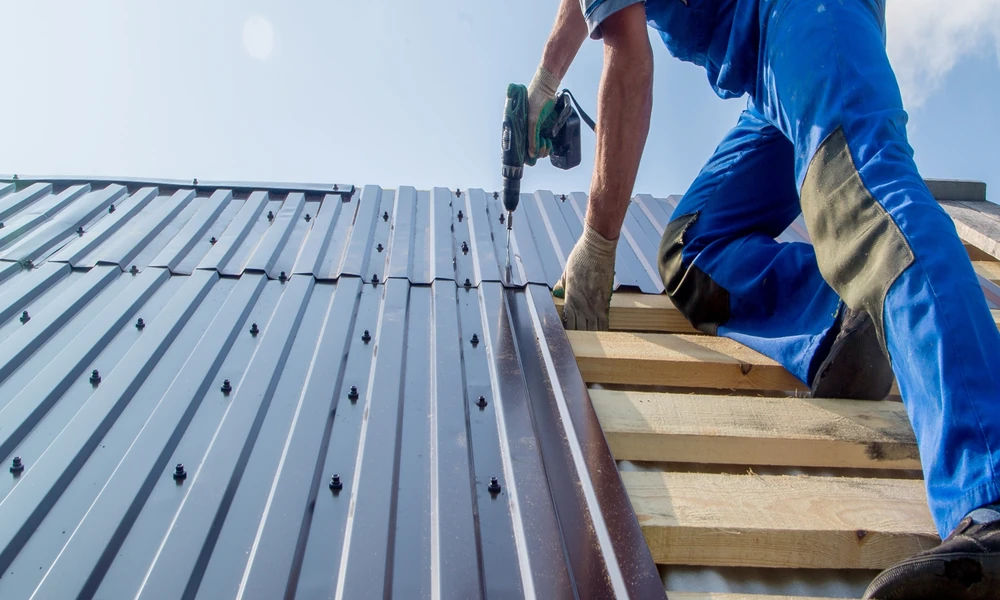
Anyone who has lived along the Wasatch Front knows the sound of an east wind pouring out of the canyons at night. By morning there are shingles in the gutter, a few more on the lawn, and a homeowner wondering how a roof rated for serious wind gave up so easily. The answer usually has little to do with the shingle brand. A wind rating describes what a product can survive when it goes on correctly, and it says almost nothing about what happens when it doesn’t.
That gap between the label and the result is decided on installation day, in dozens of small choices most homeowners never see. Where each nail lands, what sits under the first row, how the ridge is capped, and whether the adhesive strips ever bond all matter more than the color chart or the price per square.
Crews that work strictly to manufacturer specification tend to explain those choices without being asked. Dedication Roofing, a family owned West Valley City contractor working across the Salt Lake Valley since 2017, carries Malarkey certification for residential shingles and IB certification for flat membrane systems, and that sort of training is exactly what keeps a rated roof performing at its rating. Knowing what to look for yourself is still worth the effort, so here is how a shingle roof earns its wind resistance, layer by layer, from the wood up.
Everything Rides on the Deck Underneath
Shingles can only hold as well as the sheathing they’re fastened into. Plywood or OSB that has softened from an old leak, delaminated at the edges, or was attached with too few fasteners gives every nail above it a weak grip. During a tear off, a careful crew walks the deck, replaces soft panels, and re-nails sheathing where it has loosened. Ring shank nails in the deck hold noticeably better against uplift than smooth ones.
Some builders go a step further and tape the seams between deck panels. The idea is simple. If wind does peel back shingles, water still can’t run through the joints into the attic. Insurers’ research groups have pushed this sealed deck approach for years because so much storm damage inside a home starts with a few missing shingles above an open seam.
The Bottom Edge Takes the First Hit
Wind attacks a roof where it can get underneath something, and eaves and rakes are the obvious starting points. Metal drip edge stiffens that perimeter and keeps water off the fascia. Above it goes the starter course, a dedicated strip with a line of factory adhesive positioned to grab the first row of shingles.
Older crews sometimes skipped the starter product and flipped a regular shingle upside down instead. That puts the adhesive in the wrong place, leaving the very first course loose along its edge. Many manufacturers now tie their higher wind warranties to using their own matching starter and ridge products, which is a good reason to ask which starter is going on your house.
Underlayment Has a Wind Job Too
Underlayment is usually discussed as a water barrier, but it also buys time when shingles fail. Synthetic underlayment fastened with plastic cap nails stays put far better than old felt fastened with bare staples. On low slopes between 2:12 and 4:12, manufacturer instructions commonly call for a double layer, since water moves slowly there and wind can push it uphill. Along the eaves, an ice and water membrane earns its place in Utah winters, where ice dams can force meltwater under the lower courses.
Where the Nail Goes Matters More Than How Many
Every architectural shingle has a nailing zone, usually a marked strip where two layers of the shingle overlap. Nails placed inside it pass through both layers and the top of the course below. Nails placed above it hold only one layer, and that shingle can slide or tear free in a gust it should have shrugged off. The most common fastening mistakes look small from the ground and cost a lot later.
- High nailing misses the double thickness, cutting holding power roughly in half and often voiding the wind warranty.
- Overdriven nails punch through the mat, so the head holds almost nothing.
- Underdriven nails stand proud and keep the course above from lying flat, which stops the adhesive strip from bonding.
- Crooked nails leave one edge of the head raised and tear the shingle under load.
- Staples are forbidden by many manufacturers outright, because they cut the mat and pull through easily.
The count matters too. Four nails per shingle is standard on most lines, while high wind installations and some premium shingles call for five or six. A pneumatic nailer set to the wrong pressure can repeat an overdriven or underdriven nail thousands of times across a roof, which is why good crews check their guns as the day warms up.
The Sealant Strip Needs Heat Before It Holds
Here is the detail that surprises most homeowners. A new shingle is not fully attached when the crew leaves. Its adhesive strip activates with sun and warmth, softening and fusing to the course below over days or weeks. Research from the Insurance Institute for Business and Home Safety found that sealant strength is a critical factor in how well asphalt shingles resist wind, especially after hail has stressed them.
That matters in the Salt Lake Valley, where a roof installed in late October may not truly seal until spring. Manufacturers allow for this with cold weather instructions, typically small dabs of asphalt roofing cement placed by hand under each tab. It’s tedious, and some crews skip it. A November windstorm then finds a roof full of shingles held only by their nails.
Sealant also weakens with age and repeated freeze thaw cycling, which is part of why a roof that rode out strong winds at year five can lose shingles at year fifteen. After any big wind event, look for creased or folded shingles from the ground. A crease means the tab lifted and bent back, and that seal is likely broken even if the shingle settled back down.
Ridges and Hips Finish the Argument
The peak of the roof sees some of the fiercest suction, and it is often finished with the least attention. Proper hip and ridge caps are thicker, preformed pieces with their own adhesive, fastened with nails long enough to bite through the cap, the shingles beneath, and into the deck or ridge board. Ridge vents need baffles and correct fastening as well, since a loose vent can lift in one piece and open the entire peak.
Reading Local Wind Before Reading the Label
West Valley City designs standard homes for a basic wind speed of 103 mph, and the east canyon winds that hit Davis County have pushed gusts past 100 mph in past storms. Against that, many standard shingle wind warranties sit around 110 mph, with some climbing to 130 mph or more when matching starter, ridge products, and a specific nailing pattern are used. A design wind speed and a warranty term measure different things, but the comparison shows where the margin really comes from. It comes from the installation.
So when two quotes land on your table, read past the shingle name. A written estimate that names the starter product, the ridge cap, the underlayment, the nail count, and the cold weather sealing plan is describing a complete wind system. One that lists only a brand and a color is describing a pile of bundles, and the difference between those two roofs will show up the first night the canyon wind comes calling.

Comments are closed.